Hyundai says the rooftop solar power system it will install at its Asan plant in South Korea, with a generating capacity of 10 megawatts, will be the largest in the country – and it’s right up there with the biggest single-site rooftop installations in the world.
The unique features of the quantum world promises a dramatic acceleration of information processing compared to the fastest class of classical machines.
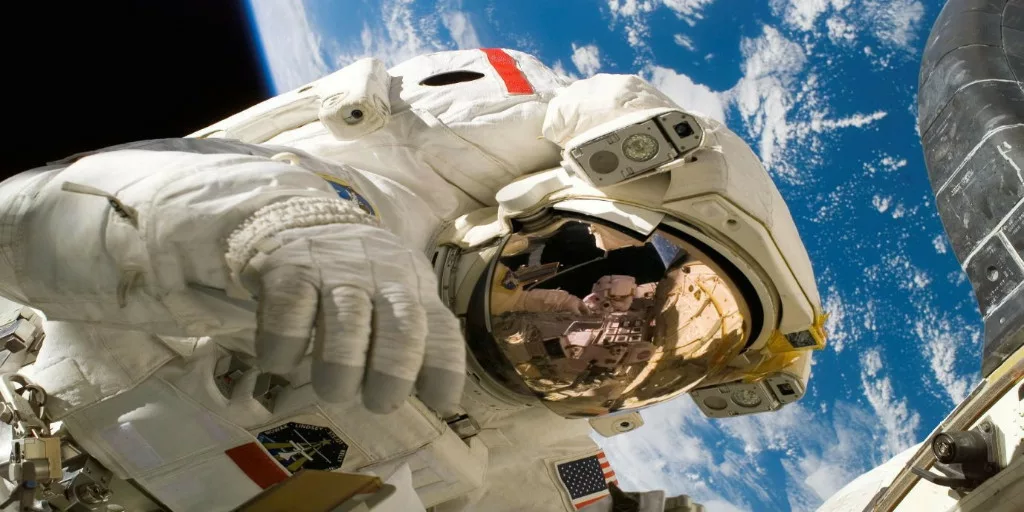
Over the weekend, the stalwart crew of the International Space Station (ISS) worked overtime to fix a leaking cooling network outside the orbital outpost.
When I travel for work, I have to keep a close eye on my laptop battery. Often I attend an event, and then immediately look for a place blog about what was presented. Being caught between a deadline and a dead battery is my own special type of torture, so I can’t stray too far from a reliable power source.
In a joint project between the Universities of Strathclyde and Glasgow, Imperial College London and the National Physical Laboratory, researchers have developed a portable way to produce ultracold atoms for quantum technology and quantum information processing.
Toyota has been on a bit of a tear lately when it comes to examining the intersection of transportation and sustainability. It, for example, showcased at the recent Shanghai Motor Show the FT-HT hybrid concept and also unveiled the all-electric Me.We vehicle as a study in ecological responsibility.
Genes make up about 2 percent of the human genome. The rest consists of a genetic material known as noncoding DNA, and scientists have spent years puzzling over why this material exists in such voluminous quantities.
Gone are the days of being able to count the number of known planets on your fingers. Today, there are more than 800 confirmed exoplanets - planets that orbit stars beyond our sun - and more than 2,700 other candidates.
The U.S. Naval Research Laboratory (NRL) recently managed to fly a fuel-cell powered Ion Tiger UAV for 48 hours and 1 minute using liquid hydrogen fuel in a new, NRL-developed, cryogenic fuel storage tank and delivery system.
You approach the Tucson mountain retreat by a 500-foot path through saguaro cactus and palo verde. The squat, earth-colored structure looks a little bunker-like at first, but from closer up the walls turn out to be not concrete but rammed earth, with a rich layering of warm colors.
NASA's Hubble Space Telescope has found the building blocks for Earth-sized planets in an unlikely place - the atmospheres of a pair of burned-out stars called white dwarfs.
In February, a speeding asteroid slammed into our atmosphere and exploded high over Russia’s Ural region, injuring hundreds and causing millions of euros of damage. What should we do if we have a similar – or even bigger – strike in the future?
A new development in extending the range of electric cars on a single charge of a battery could soon mean range anxiety is more of a thing of the past. This interesting research breakthrough comes from Australia’s University of Wollongong (UOW).
The roar of a 5,000 pound rocket engine has returned to the Johnson Space Center. The Morpheus team has completed the build-up of our “Bravo” vehicle, conducted numerous integrated tests, and has now stepped into our flight test program.
Even as amateur racing team Drive eO prepares to try and take the cup for the electric vehicle class at the upcoming Pikes Peak hill climb race in Colorado at the end of June, Toyota is busy preparing to defend its title.
If you stay up to date on green design and architecture, you read a lot of posts about futuristic designs where no poster (except maybe the original designer) seems to have a clue whether the “project” has an actual client with a budget or is simply a designer playing computer games with his or her fantasies.
The European Space Agency's (ESA) Herschel space observatory has made detailed observations of surprisingly hot molecular gas that may be orbiting or falling towards the supermassive black hole lurking at the center of our Milky Way galaxy.
Chemical engineering researchers have managed to identify a new mechanism to convert natural gas into energy up to 70 times faster, while effectively capturing the greenhouse gas carbon dioxide (CO2).
Completely surrounded by a massive 20-foot-high structure called the crew module static load test fixture, the Orion crew module is being put through a series of tests that simulate the massive loads the spacecraft would experience during its mission.